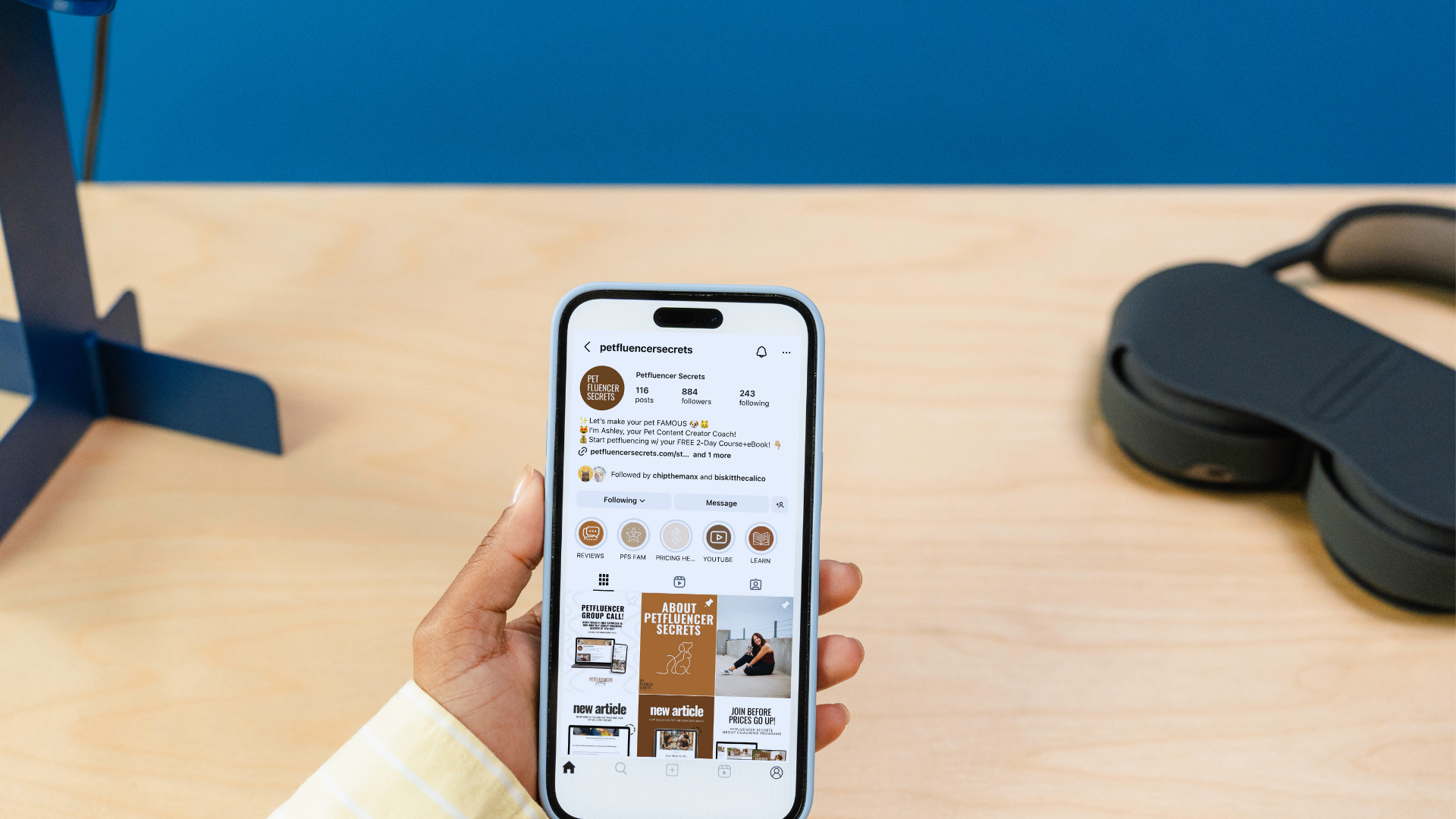
If you’ve watched social media for any length of time, it’s easy to think that being a pet influencer is nothing but free products, viral videos, adorable pets, and exciting brand deals. From the outside, it really can look like the perfect side hustle. And honestly? A lot of it is incredible.
I’ve spent more than seven years building pet brands, working with hundreds of companies, landing five-figure brand deals, and coaching hundreds of pet content creators. This career has completely changed my life, and I genuinely believe becoming a pet influencer is one of the best online businesses you can build. But I also think it’s important to be honest.
There are challenges that almost nobody talks about!!
If you plan to build a serious pet brand, you deserve to know what those challenges are before you experience them yourself. My goal isn’t to scare you away from becoming a creator. It’s actually the opposite. I want you to walk into this journey prepared instead of surprised. Every business has downsides. Every career has difficult moments. Pet influencing is no different.
Here are the four hardest experiences I’ve had during seven years as a professional pet influencer, along with what you can do to protect yourself from making the same mistakes.
The Reality Behind Being a Pet Influencer
One thing I’ve learned after coaching hundreds of creators is that success isn’t just about growing followers. It’s about protecting the business you’re building. Many new creators spend all of their time learning how to get views, land brand deals, or grow on Instagram. Those things absolutely matter. But very few people spend time learning how to avoid scams, negotiate professionally, protect their content, or deal with negativity once they become successful.
Ironically, these are often the lessons that determine whether someone lasts six months or six years. Let’s start with one of the biggest problems in the creator industry today.
1. Scams Are Everywhere!!!
If you become even moderately successful as a pet influencer, you will almost certainly become a target for scammers. I’m not exaggerating. I receive scam emails and direct messages almost every single day. After seven years, I’ve learned to recognize most of them almost immediately, but even now there are still a few that make me pause because they’re becoming incredibly sophisticated.
One of the most convincing scams I’ve ever encountered is what I call the podcast scam. It starts with an email that feels exciting. Someone claims they discovered your pet, loves your content, and wants to feature you on a well-known podcast. They reference a real podcast, use professional-looking branding, include legitimate-looking Zoom invitations, and make everything feel authentic. Naturally, you’re excited. After all, who wouldn’t be?
As the fake interview progresses, they eventually ask you to share your screen while they “test” your livestream setup. From there, they guide you into the backend of your Meta Business Suite and attempt to trick you into granting them administrator access. If you do, you’ve essentially handed over control of your Facebook pages, Instagram accounts, advertising accounts, and potentially your business itself. It’s terrifying. Thankfully, I caught what was happening before it was too late, but many creators haven’t been so fortunate.
Unfortunately, scams don’t stop there. I’ve seen fake brand collaborations asking creators to fill out detailed shipping forms that collect personal information. Others ask for phone numbers, addresses, tax information, or identity verification before disappearing completely. Some scammers impersonate legitimate companies. Others build entirely fake websites that look almost identical to real brands.
The bigger your audience becomes, the more frequently these messages arrive.
That’s why one of the most valuable skills you can develop as a creator isn’t editing videos or writing captions. It’s learning how to recognize suspicious opportunities before they become expensive mistakes. Whenever something feels rushed, overly flattering, or requires unusual account access, slow down. Verify the sender. Visit the company’s official website yourself. Reach out through their public email if necessary. Trust your instincts. Protecting your business is every bit as important as growing it.
2. Sometimes Brands Simply Don’t Pay
One of the biggest misconceptions about influencer marketing is that every collaboration ends with a payment hitting your bank account. I wish that were true. Early in my creator journey, I accepted a collaboration with a company promoting a self-cleaning litter box.
The company sent the product. I filmed the content. I edited the video. I submitted the draft. Then…nothing. Days turned into weeks. Weeks turned into months. Eventually, the company replied, asking me to publish the content first and promising payment afterward. Looking back, there were multiple warning signs, but I was new and simply didn’t know any better. I wanted to be professional, so I trusted them. That trust cost me.
After posting the content, I spent months trying to follow up. I emailed repeatedly asking whether they needed my PayPal information or payment details. I received almost no communication, and eventually it became clear that I wasn’t getting paid at all. To make matters worse, there was no contract. That meant there was nothing defining payment terms, content ownership, usage rights, or deadlines. They had my video, and I had very little legal protection. Needless to say, I’ve never worked with that company again. Today, I tell every creator the same thing.
Never complete a paid collaboration without a written contract.
Thankfully, contracts have become much more common throughout influencer marketing in recent years. Most legitimate companies expect them, and professional creators rely on them. A contract protects both sides. It clearly defines deliverables, payment schedules, revision limits, usage rights, exclusivity periods, cancellation policies, and ownership of your content. Everyone knows exactly what’s expected before filming even begins.
Professional creators don’t use contracts because they distrust brands. They use contracts because they’re running a business.
3. Your Content Will Get Stolen
This is one of those realities that almost every successful creator experiences eventually. The bigger your account becomes, the more likely someone is going to download your videos, remove your watermark, and upload them somewhere else as if they created them. Content theft is unfortunately part of being a creator.
Years ago, before social media platforms became much better at detecting original content, this happened to me constantly. Friends, family members, and even other creators would send me links asking, “Did you post this?” It would be one of my own videos…on someone else’s page. At one point, someone created an entire Facebook page that existed almost exclusively to repost my content.
Every single time I uploaded a new video, they downloaded it and uploaded it as their own.
The frustrating part? Their page actually started outperforming mine. Because Facebook’s monetization program was taking off at the time, they were earning money from videos I spent hours creating. Some of my videos received more views on their page than they did on my own. Imagine logging in and seeing your hard work helping someone else grow their business while your own page struggled. It was incredibly discouraging. Even worse, proving ownership wasn’t simple. Since their reposted videos sometimes accumulated more engagement than mine, it almost looked like I was the one copying them. Eventually I was able to get the page removed, but it took far longer than it should have.
Today, platforms have improved significantly. Original content is recognized much more effectively than it was a few years ago, but that doesn’t mean content theft has disappeared. It still happens. In fact, inside our Petfluencer Secrets coaching community, creators regularly message saying they discovered their videos on another account. My response is almost always the same.
“Welcome to the club!!”
Not because it’s funny, but because it’s incredibly common. The good news is that there are ways to handle it. Copyright reporting systems have improved, and understanding how to document ownership makes the process much easier. The important thing is realizing that if your content starts getting copied, it’s often a sign that you’re creating something people actually want to watch. Don’t let it discourage you from continuing to create.
4. Negative Comments Hurt More Than You Expect
Of everything I’ve experienced during seven years as a creator, this is probably the hardest emotionally. People will criticize you. They’ll criticize your editing. Your captions. Your voice. Your appearance. Your personality. And sometimes…they’ll criticize your pet.
Over the years, I’ve received countless comments from people saying they didn’t like my voice. Others commented on my appearance, my body, my hair, or my face. During pregnancy, when my body naturally changed and I gained weight, those comments became especially difficult.
I was still filming brand deals. I was still showing up for my audience. I was still running my business. Meanwhile complete strangers felt comfortable criticizing things I couldn’t change. That was hard.
Then there were the comments directed toward Chip. If you’ve followed my content, you know Chip is a Manx cat. He was born without a tail because that’s part of his breed. Unfortunately, many people don’t know what a Manx cat is.
Several of my videos went viral with thousands of comments accusing me of cutting off my cat’s tail or abusing him. People reported my videos repeatedly because they genuinely believed something terrible had happened. Eventually enough reports accumulated that one of my channels appeared to become heavily suppressed. At the time I was regularly receiving between 50,000 and 80,000 views per video.
Almost overnight, those numbers dropped to only a few hundred views. For months. It took six to nine months of consistently publishing quality content before my account fully recovered. That’s one of the hardest lessons I’ve learned as a creator.
Virality isn’t permanent. Neither are setbacks.
Sometimes algorithms change. Sometimes your account gets hit unfairly. Sometimes misinformation spreads. Sometimes people simply misunderstand what they’re seeing. The only thing you can control is continuing to create excellent content. And that’s exactly what I did.
Every Creator Faces Challenges
After reading all of this, you might be wondering if becoming a pet influencer is still worth it. My answer hasn’t changed. Absolutely. If anything, knowing these challenges ahead of time gives you an advantage. Every business comes with obstacles. Traditional businesses deal with difficult customers, unpaid invoices, legal issues, and competition. Content creators simply experience those same challenges in different forms.
You’ll encounter scammers. You’ll probably deal with difficult brands. Your content may get copied. Someone will eventually leave a rude comment. None of those things mean you’ve failed. In fact, they’re often signs that you’re growing.
The creators who build long-term businesses aren’t the ones who avoid problems entirely. They’re the ones who learn how to solve them professionally and keep moving forward.
That’s the difference between someone posting videos for fun and someone building a real business.

Need More Help? We’re Here to Help!
If you’re serious about becoming a successful pet influencer, you don’t have to figure everything out alone.
Petfluencer Foundations is the perfect starting point for beginners who want a complete roadmap for growing a pet account from scratch. You’ll learn content strategy, storytelling, Instagram growth, monetization, brand partnerships, and the exact systems that have helped hundreds of creators grow faster.
Once you’re ready to turn your audience into a real business, 6-Figure Pet Influencer walks you through the advanced strategies I’ve personally used to land five-figure brand deals, negotiate higher rates, build long-term partnerships, and create a sustainable full-time income as a creator.
If YouTube is your biggest opportunity, my YouTube Strategy program teaches the exact framework I’ve used to grow channels, increase watch time, and create long-form videos that continue bringing in views, subscribers, and revenue month after month.
Whether you’re just starting or already growing quickly, these resources were built to help you avoid the mistakes that cost me years of trial and error.
Frequently Asked Questions
Is becoming a pet influencer worth it?
Absolutely. Like any business, there are challenges, but the opportunities for brand deals, affiliate income, YouTube revenue, and long term partnerships make it an incredible business when approached strategically.
How can I avoid influencer scams?
Always verify who you’re speaking with, avoid granting account access through screen sharing, double-check email addresses, and never share sensitive business information unless you’ve confirmed you’re communicating with a legitimate company.
Should every paid collaboration have a contract?
Yes. Every single one. A contract protects both you and the brand by outlining payment, deadlines, ownership, usage rights, and deliverables before any content is created.
What should I do if someone steals my content?
Document everything immediately. Save screenshots, gather links, and submit copyright reports through the platform where your content was reposted. Acting quickly usually leads to faster resolutions.
How do successful creators deal with negative comments?
The best creators learn not to take every comment personally. Focus on your community, continue creating quality content, and remember that criticism often increases as your audience grows.
Can negative reports permanently hurt my account?
Not necessarily. While false reports or periods of reduced reach can happen, consistently publishing high quality content and following platform guidelines often helps accounts recover over time.
What’s the best way to build a long term career as a pet influencer?
Treat it like a business from day one. Learn storytelling, build strong relationships with brands, protect yourself with contracts, diversify your income, and continue improving your content instead of chasing quick viral moments.
Final Thoughts
Being a pet influencer has been one of the most rewarding experiences of my life, but it certainly hasn’t been perfect. I’ve dealt with scams, unpaid collaborations, stolen content, and some incredibly hurtful comments over the years. Despite all of that, I wouldn’t trade this career for anything.
Why?
Because every challenge taught me how to become a better content creator and a better business owner.
If you go into this journey expecting perfection, you’ll probably become discouraged. But if you understand that obstacles are simply part of building something meaningful, you’ll be much more prepared than most creators starting today.
The goal isn’t to avoid every problem. The goal is to build a business strong enough to survive them.
Keep learning. Keep creating. Keep showing up for your audience. Your future followers, brand partners, and opportunities are waiting for you!